What Is Data Enablement Software and Why It’s Essential?
Published: 12 Nov 2025
Ever felt confused when people talk about using data to make business decisions? You are not alone. Many teams today have access to more data than ever before, yet they still struggle to use it in a smart and organized way. They gather numbers, reports, and insights from different tools, but when it is time to act, the information feels scattered and hard to trust. That confusion leads to slow decisions and missed opportunities. The real challenge is not collecting data but knowing how to turn it into something useful. In this guide, we will explore what is data enablement software, why modern companies depend on it, and how it helps both technical and non-technical teams use data with confidence. You will also learn about its key features, real-world examples, and how to choose the right tool for your business. By the end, you will clearly understand how data enablement can turn complex information into simple, powerful insights that drive success.
Table of Contents
What is Data Enablement Software?
Data enablement software is a tool that helps people use company data in a simple and organized way. It connects data from different sources and brings it together in one place. This makes it easier for teams to find, understand, and use the information they need. It also keeps data clean, secure, and ready for use. With this software, even non-technical users can explore reports and make data-based decisions without help from IT. It saves time by reducing manual work and avoids confusion caused by scattered data. In short, it gives everyone the power to use accurate data when they need it. That is why data enablement software is essential for businesses that want to grow with confidence.
Importance of Data Enablement Software
In today’s world, every business runs on data, but not every team knows how to use it well. Data enablement software helps turn raw information into clear insights that guide real action. It gives structure, control, and easy access to data for everyone in the company.
Here’s why it’s important:
- Helps teams make faster and smarter decisions.
- Keeps all company data clean, safe, and organized.
- Reduces time wasted in searching for the right data.
- Makes data easy to understand for non-technical users.
- Builds trust in reports and analytics.
- Improves teamwork through shared access and insights.
- Supports business growth with better data visibility.
How Data Enablement Software Works
Data enablement software works by connecting, cleaning, and organizing data so teams can use it easily. It brings together information from different tools and systems into one place. This helps everyone find the right data at the right time without confusion.
Here’s how it works step by step:
- It connects to all your data sources like apps, files, and databases.
- It collects and combines the data into one simple view.
- It cleans the data by removing errors or duplicate entries.
- It organizes the data into clear groups or categories.
- It gives access to the right people based on their role.
- It provides easy tools to search, view, and share data.
- It helps teams use this data to make reports and smart decisions.
Types of Data Enablement Software
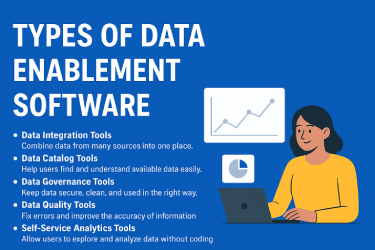
Data enablement software comes in different types based on what it helps a business do. Each type has its own purpose, but all work toward making data easy to use and understand. Knowing these types helps you pick the right tool for your team’s needs.
Here are the main types:
- Data Integration Tools: Combine data from many sources into one place.
- Data Catalog Tools: Help users find and understand available data easily.
- Data Governance Tools: Keep data secure, clean, and used in the right way.
- Data Quality Tools: Fix errors and improve the accuracy of information.
- Data Sharing Tools: Make it simple for teams to share data safely.
- Self-Service Analytics Tools: Allow users to explore and analyze data without coding.
- Collaboration Tools: Help teams work together and share insights from the same data.
Advantages and Disadvantages of Data Enablement Software
In this section, we will look at the pros and cons of using data enablement software. Knowing both sides will help you decide if it fits your business needs.
Advantages of Data Enablement Software
It offers many benefits that make data handling easier, faster, and more reliable.
- Brings all company data together in one place, reducing confusion.
- Saves time by reducing manual data work and repetitive tasks.
- Improves accuracy and trust in reports, so decisions are reliable.
- Makes data simple to understand for all users, even non-technical staff.
- Helps teams make faster and better decisions using real-time insights.
- Strengthens teamwork with shared data access across departments.
- Supports business growth through data-driven strategies.
- Reduces errors by keeping data clean, updated, and consistent.
- Provides a clear view of business performance for managers and leaders.
- Enables quick problem-solving by highlighting trends and issues early.
Disadvantages of Data Enablement Software
Like any tool, it also has a few challenges that need attention.
- Can be costly for small businesses to buy or implement.
- Needs regular updates and system checks to work properly.
- May require basic training for new users to understand features.
- Data security must be carefully managed to avoid leaks.
- Can take time to connect all data sources and set up properly.
- Some tools may not fit every business system or workflow.
- Over-reliance on the software may reduce manual analysis skills.
- Poorly maintained data can still lead to incorrect insights.
Future of Data Enablement Software
The future of data enablement software looks promising for all types of businesses. More companies will focus on making data easy to use for everyone, not just technical teams. Tools will become faster, smarter, and more connected, helping teams get insights in real time. We can also expect better ways to manage large amounts of data without confusion or errors.
Data will play an even bigger role in decision making. Businesses that use data effectively will have a clear advantage over those that do not. Software will continue to evolve, making it simpler to explore, share, and understand information. In my view, companies that adopt these tools early will find it easier to grow, innovate, and stay ahead in a competitive market.
Trends in Data Enablement Software
Data enablement software is changing fast, and several trends are shaping its future. More tools are focusing on self-service features, letting teams explore and use data without relying on IT. Companies are also connecting multiple data sources in real time, making information more accurate and up to date. Another trend is collaboration teams can now share dashboards and insights more easily than before.
I also see a strong push toward data democratization, where every employee can access the right data safely. Security and compliance are becoming more important as businesses handle more sensitive information. In my experience, staying aware of these trends helps businesses choose the right tools and use data more effectively. The companies that follow these trends will be able to make faster, smarter decisions and stay ahead in their industries.
Real Life Use Cases and Examples of Data Enablement Software
Data enablement software is not just a tool it is helping real businesses solve real problems every day. Different industries use it in unique ways to make smarter decisions, save time, and improve teamwork. Here are some clear examples of how companies use it effectively:
- Retail: Stores combine sales, inventory, and customer data to understand buying trends and plan promotions.
- Healthcare: Hospitals organize patient records and treatment data to improve care and track outcomes.
- Finance: Banks use it to monitor transactions, detect errors, and create accurate reports for compliance.
- Education: Schools track student performance and attendance data to support learning programs.
- Marketing: Teams analyze campaign data from multiple channels to improve targeting and engagement.
- Manufacturing: Companies track production data, machinery performance, and supply chains to reduce downtime.
These examples show how data enablement software turns raw information into clear insights. It helps teams work faster, reduce mistakes, and make decisions that drive growth and success.
Conclusion
In this guide, we have explored what is data enablement software and why it’s essential. We looked at how it works, its types, advantages and disadvantages, future trends, and real life examples. By now, you can see how it helps businesses organize, access, and use data more effectively.
My recommendation to all folks out there is to start using these tools, even in small ways. They make decision-making faster, reduce mistakes, and help teams work together better. The sooner you embrace data enablement, the easier it becomes to turn information into real results.
So, guys, keep learning and exploring new ways to make your data work for you!
Commonly Asked Questions
It collects data from different sources and keeps it in one place. It makes the data clean, safe, and easy to use. Teams can access and use the data directly without waiting for help.
It collects data from different sources and keeps it in one place. It makes the data clean, safe, and easy to use. Teams can access and use the data directly without waiting for help.
Any business that works with a lot of data can use it. Marketing, sales, finance, and operations teams all benefit. It is helpful if your team struggles to find or trust data.
Data management stores and protects data. Data enablement makes the data easy to use and understand. It helps turn data into action, not just store it.
Look for easy access, clear organization, simple dashboards, and safe sharing. It should connect to different data sources and be easy for all team members to use.
Data may stay hidden or be hard to use. Teams may waste time fixing mistakes or searching for the right information. Decisions can be slow or wrong if the data is not ready.






- Be Respectful
- Stay Relevant
- Stay Positive
- True Feedback
- Encourage Discussion
- Avoid Spamming
- No Fake News
- Don't Copy-Paste
- No Personal Attacks
- Be Respectful
- Stay Relevant
- Stay Positive
- True Feedback
- Encourage Discussion
- Avoid Spamming
- No Fake News
- Don't Copy-Paste
- No Personal Attacks
