What are the Advantages and Disadvantages of Artificial Intelligence(AI)?
Published: 4 Oct 2025
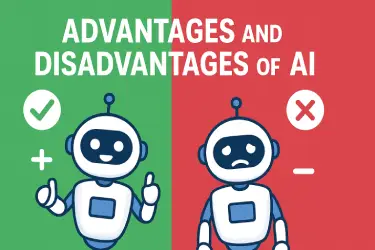
AI has changed the way we live, work and connect. From smart assistants like Alexa to advanced medical tools, AI is shaping our world in many ways. But along with these benefits, there are also risks and challenges. So, have you ever thought about what the advantages and disadvantages of AI really are?
“In this blog, we will explore the advantages and disadvantages of AI in simple words with real-life examples.
Advantages of AI
- Automation of Tasks
- Accuracy and Fewer Errors
- 24/7 Availability
- Better Decision-Making
- Fast Data Processing
- Enhanced Healthcare
- Smarter Communication
- Cost Savings in the Long Run
- Personalized Learning and Education
- Improved Security Systems
- Support in Creative Work
- Global Connectivity with Smart Tools
Disadvantages of AI
- Job Loss Due to Automation
- High Development Cost
- Lack of Human Creativity
- Over-dependence on Machines
- Privacy and Security Issues
- Ethical Concerns
- Risk of Misuse
- Limited Understanding of Emotions
- Social Isolation
- Not Always Reliable
- Health Issues from Overuse
- AI Bias and Unfair Decisions
“In short, by looking at the pros and cons of AI, or the benefits and risks of AI, we can balance technology use for a better future.”
Table of Contents
✅ Advantages of AI
Automation of Tasks
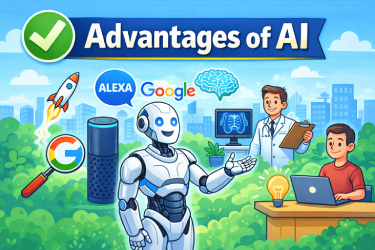
AI makes machines perform tasks automatically without human effort. In factories, robots assemble cars and other products faster than humans. This increases production speed and lowers costs. Automation also reduces human error. For example, Amazon uses AI robots in warehouses to manage thousands of items quickly and accurately. The biggest advantage here is higher efficiency with less effort.
Accuracy and Fewer Errors
AI works with very high accuracy compared to humans. It reduces errors in tasks like medical diagnosis, online transactions, and data entry. In hospitals, AI-powered machines can detect diseases such as cancer at early stages. This accuracy helps save lives and builds trust in technology across many industries worldwide. The advantage is reliable results that humans can trust.
24/7 Availability
Unlike humans, AI does not need breaks, food or sleep. Customer service chat bots and virtual assistants are always active, answering user questions at any time. Businesses benefit because customers never wait for support. For example, airlines use AI chat bots to help passengers book tickets even late at night. The advantage is round-the-clock service without delays.
Better Decision-Making
AI processes huge amounts of data in seconds and provides useful insights. This helps businesses and governments make better decisions. For example, banks use AI to detect fraud in online transactions instantly. With AI support, leaders can make decisions based on facts, not guesswork, ensuring greater safety and growth. This advantage makes planning smarter and faster.
Fast Data Processing
AI can handle and analyse massive data quickly, something humans cannot do. For instance, Google’s search engine scans billions of web pages in seconds to show relevant results. AI in research also helps scientists process complex data faster, leading to quick discoveries in medicine, space, and climate studies. The advantage is speed in handling big data.
Enhanced Healthcare
AI has brought revolutionary changes in healthcare. From robotic surgeries to smart scanners, AI helps doctors diagnose diseases earlier and with more accuracy. For example, AI tools can read X-rays or MRI scans faster than humans, spotting even the smallest details. This improves treatment and saves countless lives worldwide. The advantage is better patient care and safety.
Smarter Communication
AI breaks barriers in communication by providing instant translation and smart suggestions. Tools like Google Translate help people talk across different languages. Virtual assistants like Siri or Alexa make daily tasks easier by setting reminders or sending messages. AI makes global communication smoother, faster, and more accessible to everyone. The advantage is easy communication for all.
Cost Savings in the Long Run
While AI systems may be expensive to build and maintain at first, they save a lot of money in the long term. AI reduces errors, improves efficiency, and replaces repetitive tasks. For example, automated machines in factories reduce labour costs and increase profit, making businesses more competitive and successful. This advantage leads to higher profits with lower costs.
Personalised Learning and Education
AI has changed the education sector by making learning personalised. Apps like Duo lingo or Google Classroom adjust lessons according to a student’s pace and needs. Teachers also use AI tools to track student progress. This way, every student learns in their own style, making education more engaging and effective. The advantage is better learning for every student.
Improved Security Systems
AI plays a huge role in improving security and safety. AI-powered cameras can detect unusual activities and alert authorities in real time. Airports use AI systems to scan luggage for hidden threats. Online platforms also use AI to prevent cyber attacks. This ensures both physical and digital security for everyone. The advantage is safer lives and data protection.
Support in Creative Work
AI is not just technical, it also supports creativity. Designers use AI to create logos, music producers use it for beats, and writers use it for blog ideas. For example, tools like Canva and ChatGPT help in design and content creation. AI acts as a creative partner for professionals. The advantage is boosting creativity with smart tools.
Global Connectivity with Smart Tools
AI makes global communication and collaboration much easier. Businesses use AI-powered apps like Zoom and Microsoft Teams for meetings worldwide. Translation tools break language barriers during conversations. Even students attend virtual classes with AI support. This global connectivity allows people to share knowledge, ideas, and opportunities across different countries. The advantage is connecting people worldwide.
👉 “The advantages and disadvantages of AI explain both its positive impact and the challenges it creates in today’s world.”
❌ Disadvantages of AI
AI Bias and Unfair Decisions
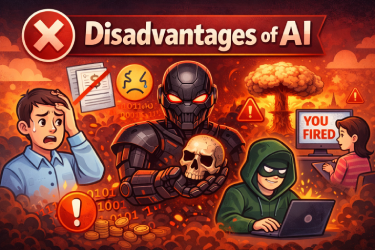
Bias is a serious disadvantage of AI. Since AI learns from existing data, if the data is biased, results become unfair. For example, recruitment AI may favor certain races or genders. This disadvantage of AI creates discrimination instead of equality. Without human monitoring, biased AI systems can damage trust and harm individuals.
Job Loss Due to Automation
One major disadvantage of AI is unemployment. Machines and robots replace humans in industries like factories, offices, and customer service. While companies save money, workers lose jobs. Without new skills, many struggle to find work. Over time, this disadvantage of AI can create financial instability and fear of machines replacing people.
High Development Cost
Another disadvantage of AI is its high cost. Developing and maintaining AI requires powerful hardware, skilled programmers, and constant upgrades. For example, creating self-driving cars costs millions of dollars. Small companies cannot afford this expense. This financial disadvantage of AI widens the gap between large corporations and small businesses struggling to compete.
Lack of Human Creativity
A big disadvantage of AI is lack of imagination. While machines can write, design, or compose, they only follow patterns. AI cannot create genuine emotions or original ideas. For example, it can generate a poem but without real feelings. This disadvantage of AI limits innovation and makes it unable to replace true creativity.
Over-dependence on Machines
Over-dependence is a serious disadvantage of AI. People increasingly rely on AI for tasks like calculations, answers, and daily planning. Students depend on apps instead of learning themselves. This reduces problem-solving skills and makes people lazy. If AI systems fail, humans may struggle to manage tasks, showing the dangerous disadvantage of over-reliance.
Privacy and Security Issues
A critical disadvantage of AI is data risk. AI collects personal details like location, photos, and financial records. Hackers can misuse this data, causing privacy leaks or fraud. Without strict security, sensitive information falls into the wrong hands. This disadvantage of AI highlights why strong regulations are necessary to protect individuals online.
Ethical Concerns
Another disadvantage of AI lies in ethics. For example, if a self-driving car causes an accident, it’s unclear who is responsible—the developer, the owner, or AI itself. Such questions create confusion. The ethical disadvantage of AI also includes risks like surveillance, weaponize or spreading misinformation, raising global concerns about fairness and accountability.
Risk of Misuse
The risk of misuse is a major disadvantage of AI. Criminals use it for deepfakes, scams, and hacking. Fake voices and images can spread lies or steal money. This misuse creates danger for societies and nations. Without strict monitoring, this disadvantage of AI can cause long-term harm, damaging trust in digital systems.
Limited Understanding of Emotions
A human-centred disadvantage of AI is its inability to understand feelings. Chat bots reply logically but lack empathy or comfort. For example, an AI cannot truly console a sad person. This disadvantage of AI makes it unsuitable in sensitive areas like counselling, teaching or healthcare, where compassion and emotional intelligence are very important.
Social Isolation
One social disadvantage of AI is reduced human interaction. People spend more time with machines, games, or assistants than family and friends. Over time, this leads to loneliness and weakens relationships. While AI tools make life easier, the disadvantage of AI is that it encourages isolation and reduces real connections between people.
Not Always Reliable
Reliability is another disadvantage of AI. Machines are intelligent but not perfect. For example, facial recognition systems often misidentify people. Blindly trusting AI in law, medicine, or banking can lead to dangerous mistakes. This disadvantage of AI shows that human supervision remains essential, as machines cannot always make accurate or fair decisions.
Health Issues from Overuse
A health-related disadvantage of AI is physical harm. Spending long hours on AI gadgets causes eye strain, back pain, and sleep problems. Lack of movement increases obesity and stress. This disadvantage of AI not only affects the body but also the mind, proving that technology overuse damages human health in the long run.
“The advantages and disadvantages of AI show how this technology is shaping our world.”
📝 Conclusion
Artificial Intelligence is shaping our world faster than ever before. From healthcare to education, business to entertainment, AI is everywhere. It makes life easier, saves time, and opens new doors of opportunities. But just like every technology, AI also comes with risks like job loss, privacy issues, and over-dependence.
So, the key is balance. We should use AI as a helping hand, not as a replacement for human intelligence. By using AI responsibly, we can enjoy its benefits and reduce its harms.
“In short, understanding the advantages and disadvantages of AI helps us use this technology wisely.”
In conclusion, understanding the advantages and disadvantages of AI helps us use this technology wisely.
👉 What do you think? Is AI a blessing or a risk? Share your thoughts in the comments and let’s discuss!
❓ FAQs about Artificial Intelligence
1. What is Artificial Intelligence (AI)?
AI is the ability of machines to perform tasks that usually need human intelligence. It includes learning, problem-solving, and decision-making. Examples are chat bots, self-driving cars, and recommendation systems like Netflix or YouTube.
2. What are the main advantages of AI?
AI saves time, reduces human errors, and makes life easier. It helps in healthcare, education, business, and even entertainment. For example, AI tools like Google Maps guide us daily, while robots in hospitals assist doctors with surgeries.
3. What are the disadvantages of AI?
AI can cause job loss, create privacy risks, and sometimes spread wrong information. It also makes humans over-dependent on machines. If AI systems fail or are misused, the effects can be harmful for both individuals and society.
4. Will AI replace humans?
AI will not fully replace humans but will change how jobs are done. Some tasks will be automated, but new roles will also be created. People will need to learn new skills like data analysis, coding, or digital marketing to stay relevant.
5. Is AI safe for the future?
AI is safe if used responsibly. However, misuse like deepfakes, hacking, or military use of AI can be dangerous. Governments, companies, and users must set rules and ethical standards to make AI safe and beneficial for everyone.
6. Where is AI used in daily life?
AI is everywhere! From voice assistants like Alexa and Siri to recommendation systems on YouTube, online shopping, banking, and even in spam filters of email. Every time you use Google Maps or Face Unlock, you are using AI.
7. Can AI think like humans?
No, AI cannot think or feel like humans. It follows programmed instructions and learns from data. While AI can solve problems and make decisions, it lacks emotions, creativity, and moral values that humans naturally have.
“AI is full of surprises, and these facts uncover both the advantages and disadvantages of AI.”



- Be Respectful
- Stay Relevant
- Stay Positive
- True Feedback
- Encourage Discussion
- Avoid Spamming
- No Fake News
- Don't Copy-Paste
- No Personal Attacks
- Be Respectful
- Stay Relevant
- Stay Positive
- True Feedback
- Encourage Discussion
- Avoid Spamming
- No Fake News
- Don't Copy-Paste
- No Personal Attacks
